Ethiopian Coffee Ceremony: Meaning.
More Than a Cup of Coffee
Imagine entering an Ethiopian home and being invited to sit down while fresh green coffee beans are washed and prepared. Soon, the rich aroma of roasting coffee fills the room, mingling with the gentle fragrance of incense. Small cups are arranged on a tray, snacks are shared, and conversation begins.
This is the Ethiopian coffee ceremony, known locally as buna in Amharic. It is one of the country's most cherished traditions, bringing together family members, friends, neighbours, and visitors.
In Ethiopia, coffee is not always something to drink quickly before moving on with the day. The ceremony creates time to welcome people, catch up on news, share ideas, and enjoy one another's company. It may take place during an ordinary afternoon, when neighbours visit, or during holidays and special family gatherings.
For visitors, joining a coffee ceremony is an opportunity to experience Ethiopian hospitality in a personal and memorable way.
How the Ethiopian Coffee Ceremony Begins
1. Preparing the Space
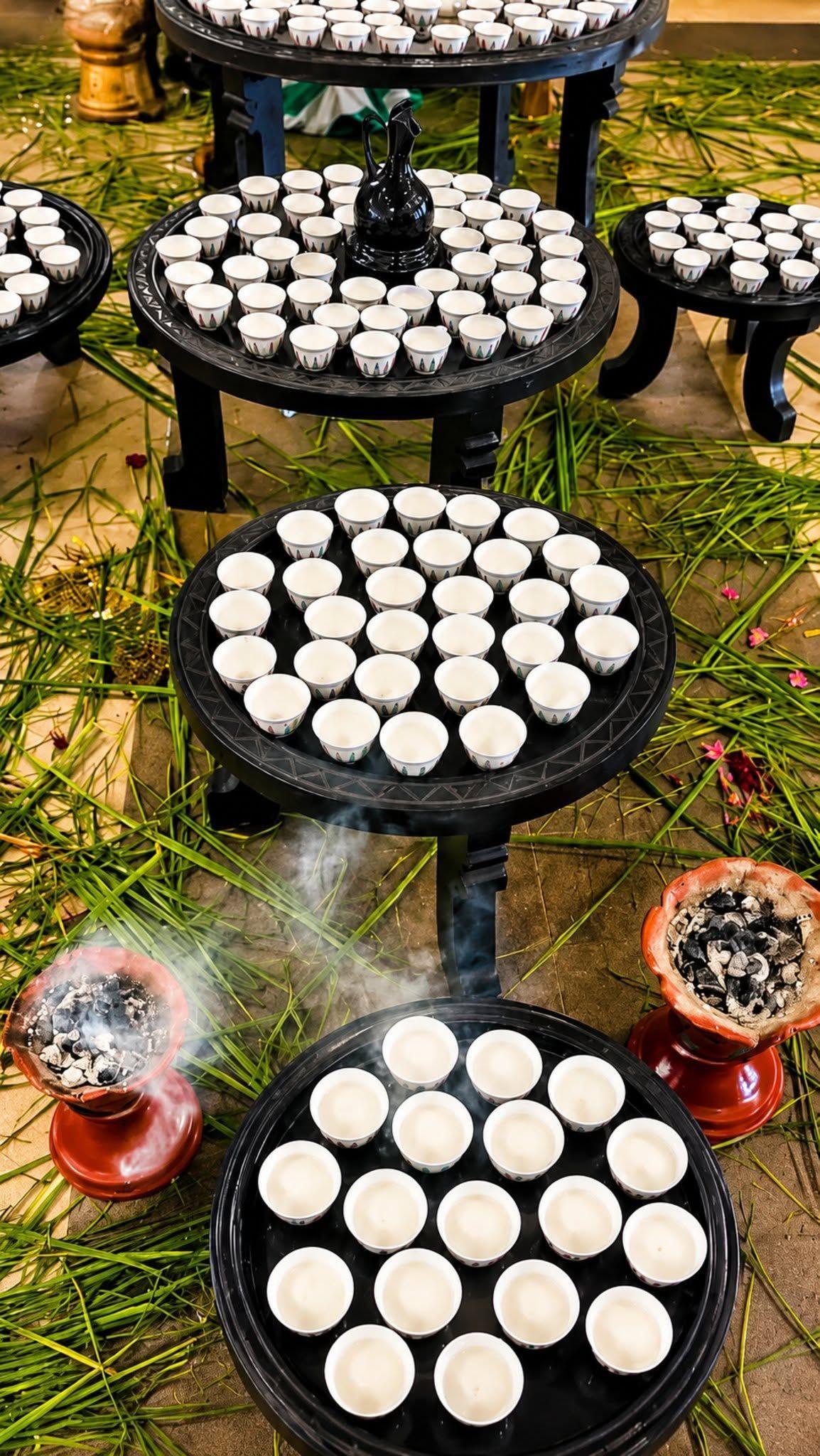
The host prepares a comfortable place for the ceremony, often spreading fresh grass on the floor and arranging the traditional coffee equipment. Incense may be burned, adding another layer of fragrance to the gathering.
The setup is simple but welcoming. Guests sit together, ready to watch the process and enjoy the time spent in one another's company.
2. Washing and Roasting the Coffee Beans
The ceremony often begins with green coffee beans being washed and cleaned. The host then places them in a flat metal pan over a charcoal stove, stirring them as they slowly turn brown.
As the beans roast, their aroma becomes stronger and fills the room. The host may bring the pan closer to guests so they can appreciate the smell of freshly roasted coffee.
This is one of the most memorable moments of the ceremony: before tasting anything, you experience the fragrance of the coffee itself.
3. Grinding the Beans by Hand
Once the beans are roasted, they are allowed to cool briefly before being ground, traditionally using a wooden mortar and pestle.
The freshly ground coffee releases an even richer aroma. The process is carried out carefully, keeping the preparation of the drink at the centre of the gathering.
4. Brewing in the Jebena
The ground coffee is placed in a traditional clay coffee pot called a jebena. Water is added, and the pot is heated until the coffee is brewed.
The jebena has a distinctive rounded body, narrow neck, and pouring spout. When the coffee is ready, the grounds are allowed to settle so the drink can be poured smoothly.
5. Serving the Coffee
The host pours the coffee into small cups, often called sini, arranged on a tray. The pouring itself can be a display of skill, with the host lifting the jebena and serving a steady stream into each cup.
Coffee is commonly served with sugar, salt, or without anything, depending on household preference. Popcorn, roasted grains, or other local snacks may accompany it.
Take a moment to enjoy the aroma before your first sip. The coffee may taste different from what you are used to, and part of the experience is discovering its flavour while sharing the moment with your hosts.
The Three Rounds of the Ceremony
A traditional Ethiopian coffee ceremony often includes three rounds. Each has a name and a place in the gathering.
- Abol — The First Round: is the first serving and is generally the strongest. It marks the beginning of the shared coffee experience, when guests settle in and conversation gets underway.
- Tona — The Second Round: is the second serving. More water is added to the coffee grounds before brewing again, producing a lighter cup. By this stage, the conversation may be flowing more freely as everyone becomes comfortable.
- Bereka — The Final Round: is the third serving and is associated with blessing. It is generally lighter than the earlier rounds and brings the ceremony toward its close.
What Does the Coffee Ceremony Mean?
A Sign of Hospitality:
Offering coffee is a way of making a guest feel welcome. Preparing it in front of visitors takes time and attention, showing that sharing a moment together matters.
If someone invites you to join a coffee ceremony, accept if you can. Even if you cannot stay for the whole gathering, a warm response and appreciation for the invitation are always welcome.
A Time for Conversation
The ceremony gives people time to talk. Family news, everyday concerns, celebrations, and community matters may all become part of the conversation.
Unlike a quick takeaway coffee, the ceremony encourages people to sit together and listen. The relationship between host and guest is just as important as the drink being served.
A Tradition Shared Across Generations
Coffee traditions are passed down through families and communities. Younger people can learn by watching and helping with the preparation, while experienced hosts share their knowledge through practice.
Where Can You Experience an Ethiopian Coffee Ceremony?
You may encounter coffee ceremonies in family homes, cultural restaurants, traditional cafés, hotels, and community tourism experiences.
In Addis Ababa, some cultural restaurants and cafés offer visitors an opportunity to watch the preparation and taste freshly brewed coffee. In other parts of the country, you may experience the ceremony through a local host, a community visit, or a stay in a traditional setting.
For a more personal experience, look for opportunities where a local host explains the preparation and welcomes questions.
Plan Your Ethiopia Experience
Explore Ethiopia's cultural experiences, destinations, and travel guides to discover more ways to connect with the country's traditions and people.