Ethiopian Food: 15 Dishes and Drinks to Try in Ethiopia
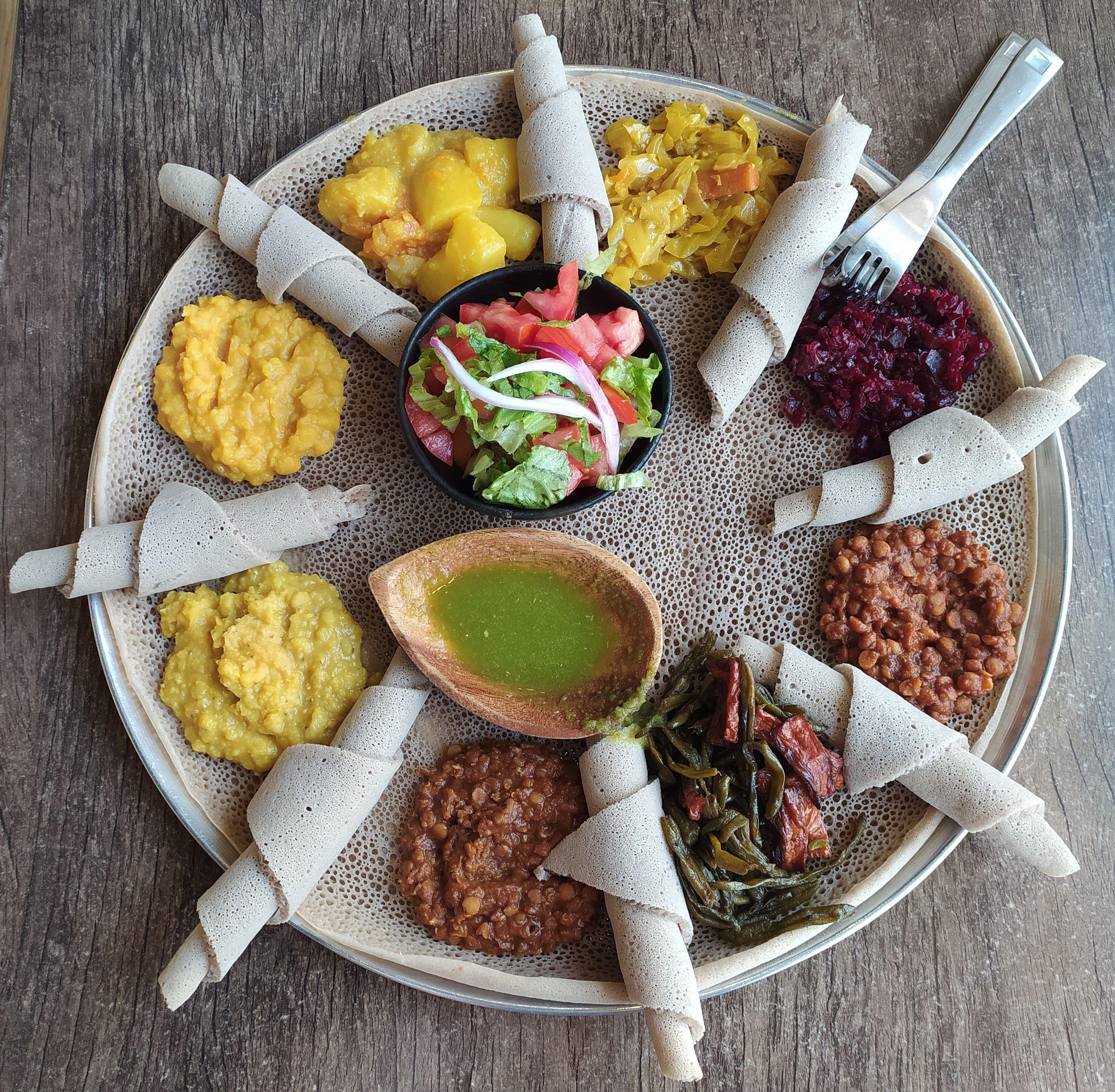
Ethiopian food is built around injera, a large, spongy flatbread made from teff, served with spicy stews called wat and eaten with the hands. The dishes to try first are doro wat (chicken stew, the national dish), tibs (sautéed meat), kitfo (spiced minced beef), shiro (chickpea stew) and beyaynetu, a colourful vegan platter. Most food is shared from one large plate, and meals often end with a traditional coffee ceremony.
Ethiopian cooking has its own spices and techniques, shaped by the highlands, the Orthodox Christian fasting calendar and centuries of trade. Here is what to order, how to eat it, and what each dish is.
How to eat Ethiopian food
Use your right hand. Tear off a piece of injera, use it to pinch up some stew, and eat both together. Injera is your plate, spoon and bread at once.
Share. Dishes are served on one large round of injera in the middle of the table, and everyone eats from the side nearest them.
Gursha. A host may feed you a bite by hand. This is called gursha and is a gesture of friendship and respect; accepting it is polite.
Wash first. Many restaurants bring water and a basin to the table so you can wash your hands before the meal.
The essentials
1. Injera
The base of almost every meal. Injera is made from teff, a tiny grain native to Ethiopia, mixed with water and left to ferment for a few days, which gives it a slightly sour taste and its spongy, bubbly surface. It is cooked on one side only on a large clay griddle called a mitad. Teff is naturally gluten-free, but some kitchens mix in wheat or barley flour, so ask if you need it gluten-free.
2. Doro wat
Ethiopia's national dish and the centrepiece of holiday feasts such as Genna and Fasika. Chicken is slow-cooked for hours with a mountain of red onions, berbere spice and niter kibbeh (spiced clarified butter) until the sauce is deep red and rich, then served with hard-boiled eggs. Spicy, but more warming than fiery.
3. Tibs
Cubes of beef or lamb sautéed with onion, green chilli, rosemary and butter. Tibs are everyday food and a safe first order. Try shekla tibs, served sizzling in a clay pot over hot coals, or awaze tibs, cooked with a spicy chilli paste.
4. Kitfo
A speciality of the Gurage people: finely minced lean beef mixed with mitmita (a hot chilli spice blend) and niter kibbeh. It is traditionally eaten raw. If you prefer it cooked, ask for leb leb (lightly warmed) or yebesele (fully cooked). Kitfo usually comes with ayib, a mild fresh cheese, and gomen, spiced collard greens, which cool the heat.
5. Shiro
A smooth stew of ground chickpea or broad bean flour, cooked with garlic, onion and berbere. It is vegan, inexpensive and loved across the country. Shiro tegabino is a thick version that arrives bubbling in a small clay pot.
6. Misir wat
Red lentils simmered in a spicy berbere sauce. A staple of fasting days and one of the most popular vegan dishes.
7. Beyaynetu
The best way to try a bit of everything. Beyaynetu is a platter of small portions of different dishes arranged on injera: usually misir wat, shiro, gomen, cabbage and carrots, beetroot and lentil salads. The fasting version is fully vegan.
8. Gomen
Collard greens cooked with garlic, ginger and green chilli. Served as a side, on its own, or mixed with ayib cheese as gomen be ayib.
Breakfast dishes
9. Firfir
Torn pieces of injera tossed in a spicy berbere sauce with butter, sometimes with leftover meat. A filling breakfast, often eaten with yogurt.
10. Chechebsa
Also called kita firfir: a flatbread torn into pieces and fried with niter kibbeh and berbere, often served with honey and yogurt. Rich and ideal before a long day.
11. Ful
Mashed fava beans with onion, tomato, chilli and olive oil, topped with egg and eaten with fresh bread rolls. Common in cafés, especially in Addis Ababa and the east.
12. Genfo
A thick barley or wheat porridge with a well of spiced butter and berbere in the middle. Traditionally served to new mothers and on cold highland mornings.
Drinks
13. Buna (coffee)
Ethiopia is the birthplace of coffee, and buna is part of daily life. In a coffee ceremony, green beans are roasted over coals, ground by hand, brewed in a clay pot called a jebena and served in three rounds, often with popcorn or kolo (roasted barley). Read more in our guide to the Ethiopian coffee ceremony.
14. Tej
Ethiopian honey wine, fermented with the leaves of gesho, a local buckthorn, and served in a round-bottomed glass flask called a berele. It ranges from sweet to dry and can be strong. Try it in a traditional tej bet (tej house).
15. Spris (layered juice)
Thick fresh juice of avocado, mango and papaya poured in layers and finished with a squeeze of lime. Found in juice bars all over the country.
Spices and flavours to know
Berbere: the signature red spice blend of chilli, garlic, ginger, fenugreek, korarima and other spices. Behind most wat dishes.
Mitmita: a hotter, orange chilli blend with cardamom and salt, used on kitfo.
Niter kibbeh: clarified butter infused with spices such as besobela (Ethiopian basil), fenugreek and cardamom. It gives many dishes their depth.
Awaze: a spicy chilli paste served as a dip or cooked into tibs.
Vegan and vegetarian food in Ethiopia
Ethiopia is one of the easiest countries in the world to eat vegan. Ethiopian Orthodox Christians fast on most Wednesdays and Fridays and during several fasting seasons, including the 55 days before Easter. On fasting days they avoid all animal products, so nearly every restaurant serves ye tsom (fasting) food. Ask for the fasting menu or a fasting beyaynetu, and you will get a vegan meal.
Food safety tips
Drink bottled or filtered water, and be careful with ice and salads washed in tap water in small places.
Raw meat dishes such as kitfo and tere sega carry a risk if they are not prepared fresh. Order them cooked (yebesele) if you are unsure.
Busy, popular restaurants are usually the freshest.
Frequently asked questions
What is the national dish of Ethiopia?
Doro wat, a slow-cooked spicy chicken stew with hard-boiled eggs, served on injera. It is the traditional dish for holidays and celebrations.
Is Ethiopian food spicy?
Many dishes are, thanks to berbere and mitmita, but not all. Tibs, alicha (mild turmeric stews), gomen and ayib cheese are gentle. You can always ask for alicha or for food that is "not spicy".
Is Ethiopian food vegan-friendly?
Yes. Because of the Orthodox fasting tradition, vegan food is available almost everywhere. Ask for the fasting menu or a fasting beyaynetu platter.
Is injera gluten-free?
Injera made only from teff is gluten-free. Some restaurants, inside and outside Ethiopia, mix teff with wheat or barley, so ask if you are avoiding gluten.
What do Ethiopians eat for breakfast?
Popular breakfasts include firfir, chechebsa, ful and genfo, usually with tea or coffee.